
Artificial Ripening Detection
Identify fruits ripened with harmful chemicals like Calcium Carbide. BioLens uses AI and sensory analysis to protect your family's health.
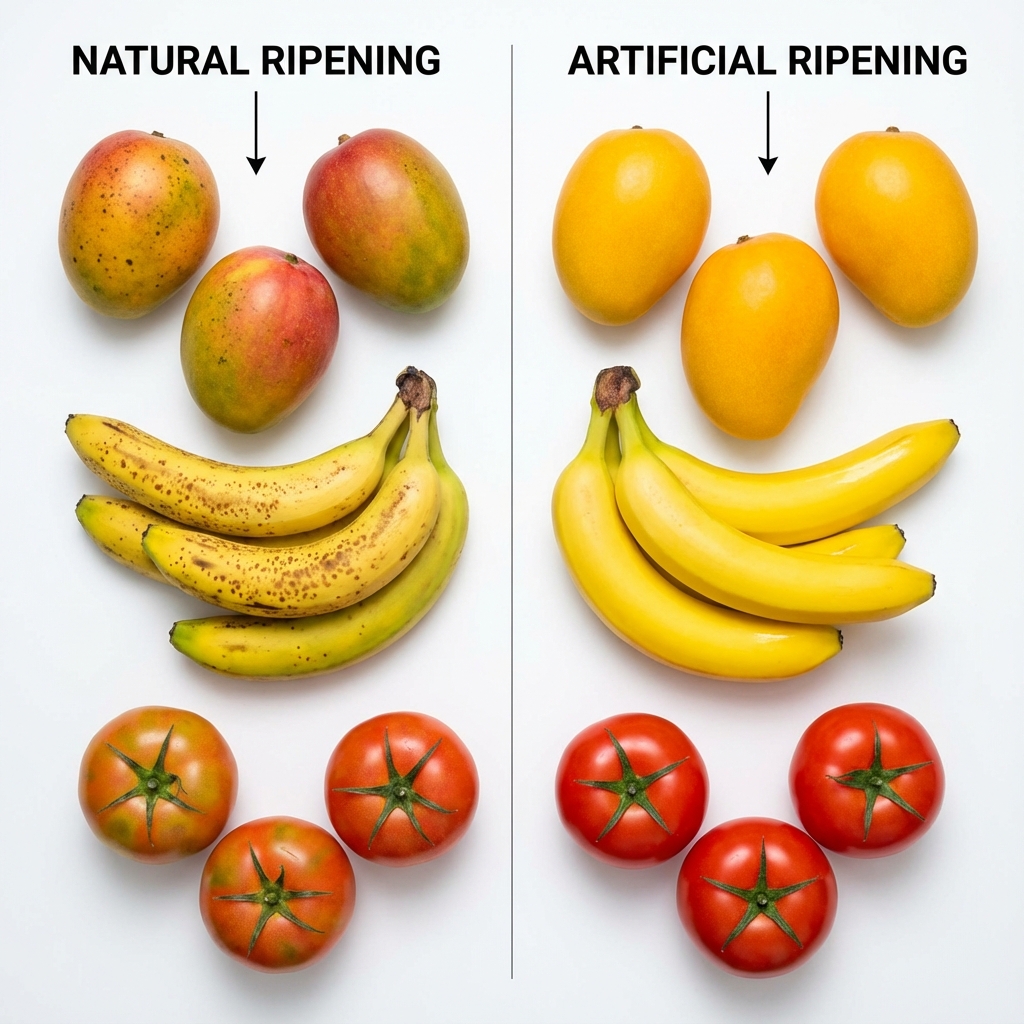
Step 1: Select Your Fruit
Choose the fruit you want to inspect for chemical ripening.
Mango
Commonly treated with Calcium Carbide. Watch for stem-end blackening and green patches.
Banana
Check for Ethedon-ripened characteristics like bright yellow skin with dark green stems.
Tomato
Artificially ripened tomatoes are often bright red outside but white/green inside.
Papaya
Look for uniform orange color without natural size progression.
Why Chemical Ripening Matters
Understanding the difference can save your health.
Calcium Carbide (CaC₂)
A hazardous chemical used to produce acetylene gas. It often contains traces of arsenic and phosphorus, which are highly toxic. Prohibited in many countries but still used illegally.
Ethylene Gas
A natural plant hormone. Commercial ripening using pure ethylene gas in controlled chambers is generally considered safe and mimics the natural process perfectly.
Safety Tip
Always wash fruits thoroughly under running water for at least 2 minutes. For Mangoes, soaking in water for 30 minutes can help remove surface chemical residues.
Ripening Comparison Matrix
| Feature | Natural Ripening | Carbide Ripening |
|---|---|---|
| Color | Varied yellow/green/red patches. | Uniform, bright, parrot yellow color. |
| Aroma | Strong, pleasant fruit fragrance. | Chemical/faint smell, or no aroma. |
| Stem | Brown or matching fruit color. | Abnormally green while fruit is yellow. |
| Internal | Uniform pulp color & sugar spots. | Red outside, but green/hard inside. |
| Density | Heavier (higher sugar content). | Lighter (floats in water). |